
Understanding Haematuria - A Guide to Identifying Causes and Knowing When to Seek Help
🩸 Blood in Your Urine? Here's What You Need to Know
A comprehensive guide to understanding haematuria and when to seek help
💡 Quick Take: Seeing blood in your urine is concerning—and that instinct is right. Most causes are treatable, but prompt action is essential for the best outcomes.

🔍 What Exactly Is Haematuria?
Haematuria simply means red blood cells are present in your urine. It appears in two distinct forms:
👁️ Visible Haematuria
You can actually see the colour change
Urine may appear pink, red, brown, or tea-coloured
Some people notice small clots
🔬 Microscopic Haematuria
Urine looks completely normal to the naked eye
Only detected through laboratory testing
A positive dipstick test must be confirmed with microscopy
⚠️ Critical Point: Even a single episode of visible blood deserves medical attention, even if it clears up on its own.
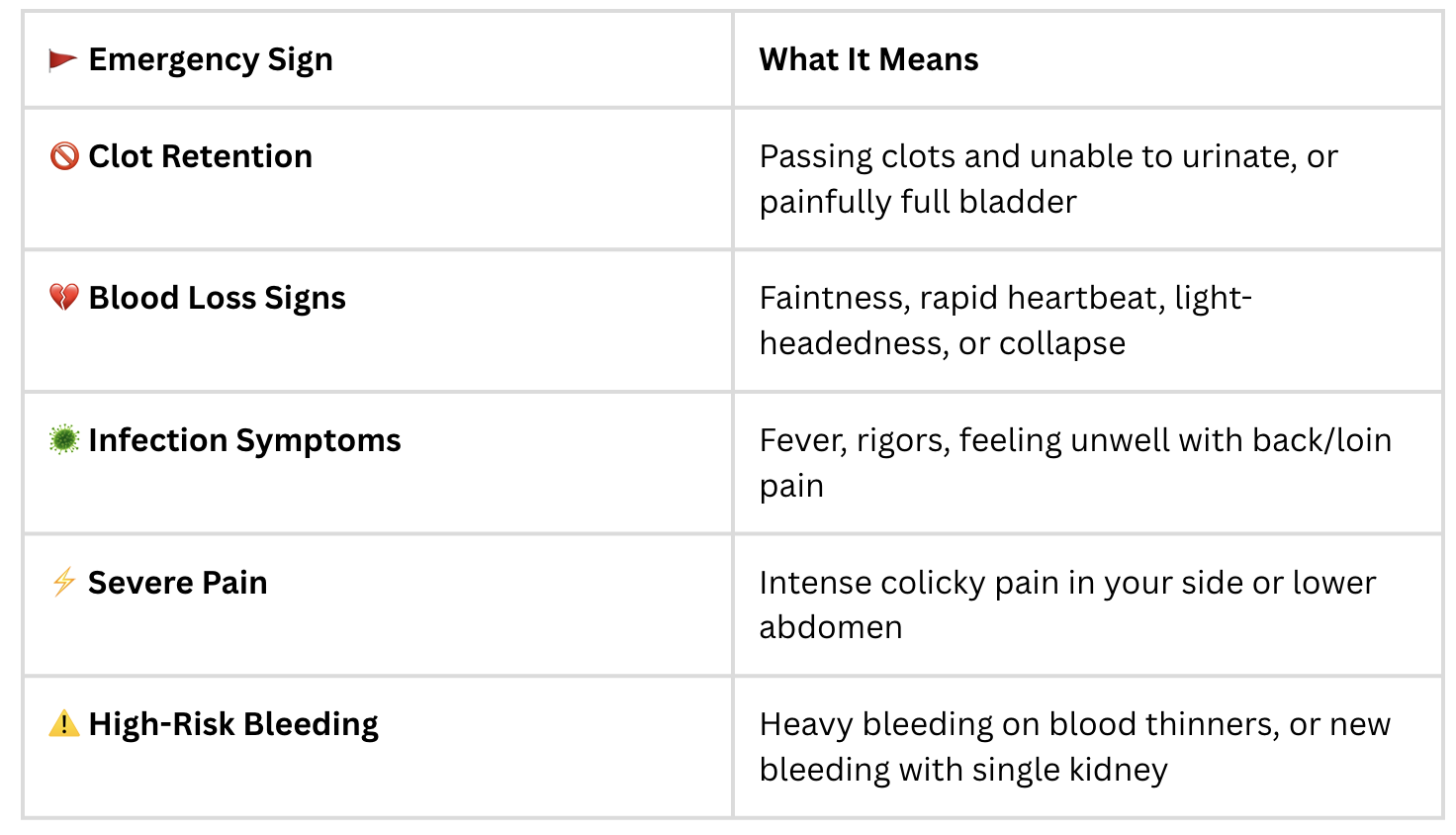
🚨 Emergency Red Flags: Seek Help NOW
Contact NHS 111, visit urgent care, or go to A&E immediately if you experience the above
When in doubt, always err on the side of safety.
🎯 Who is at particular risk?
📊 NICE Guidelines: Urgent referral recommended for ANY visible haematuria in adults aged 45 and over
Additional Risk Factors we consider :
🚬 Smoking history (including past smoking)
🏭 Occupational exposure to chemicals or dyes
☢️ Previous pelvic radiotherapy
👨⚕️ History of urinary tract cancers
🩺 Long-term catheter use
🔄 Recurrent infections
🔍 Common Causes: What Could It Be?
🦠 Infections
Cystitis or kidney infections
Often with stinging, frequency, urgency
Should resolve after antibiotics
💎 Kidney or Ureteric Stones
Sharp, intermittent flank pain
Visible blood during episodes
🎗️ Tumours
Often painless visible blood
More common in older adults and smokers
👨 Prostate Issues (men only)
Enlargement or inflammation
Intermittent bleeding
🫘 Kidney Disease
Microscopic blood plus protein
May indicate nephropathy or vasculitis
🔬 Your Investigation Journey: What to Expect
Step 1: 📝 History & Examination
Pattern and timing of bleeding
Associated symptoms
Medication review
Risk factor assessment
Physical examination
Step 2: 🧪 Laboratory Tests
Urinalysis with microscopy → confirms red blood cells
Urine culture → checks for infection
Blood tests → kidney function, blood count
Specialised tests → if kidney disease suspected
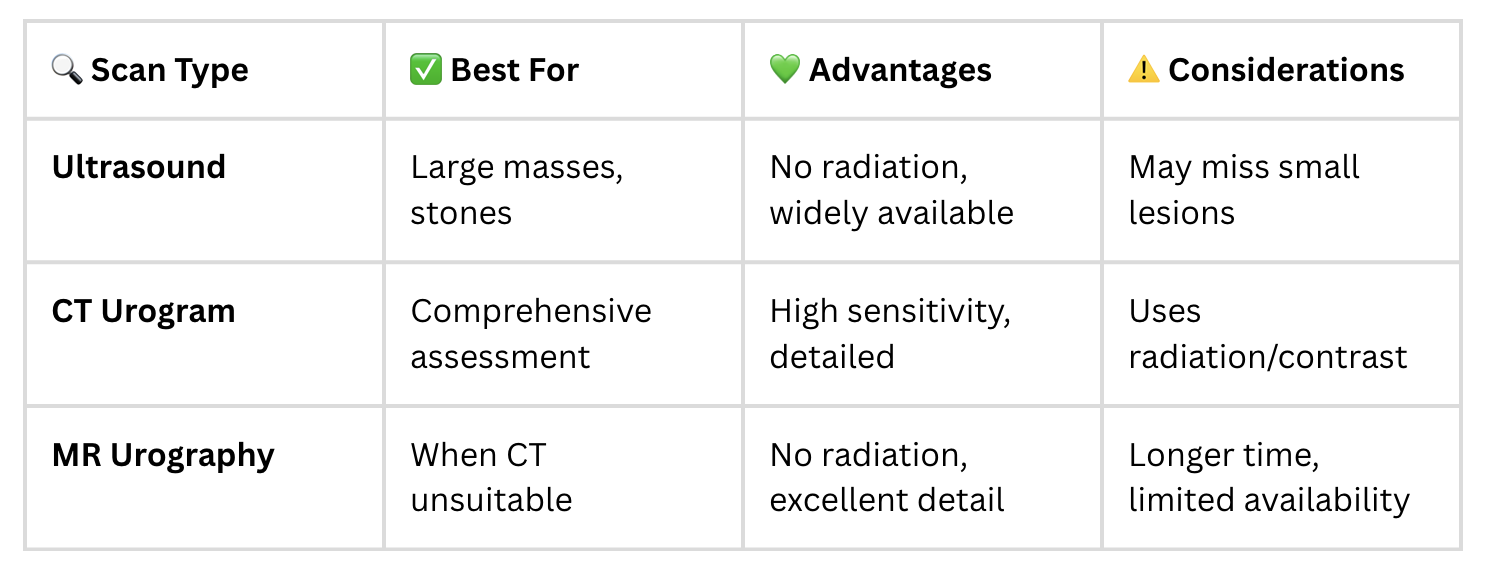
Step 3: 📸 Imaging Studies
Step 4: 🔍 Cystoscopy
Visual Enhancement Suggestion: Simple diagram showing cystoscopy procedure
What happens: Brief procedure with thin flexible camera through urethra
Experience: Brief stinging, strong urge to urinate
Recovery: Mild burning for 1-2 days is normal
✅ Take Action Today: Your Checklist
[ ] Don't ignore blood in urine - even single episodes matter
[ ] Contact your GP promptly for visible blood
[ ] Seek urgent care if unwell or severe symptoms
[ ] Provide clean urine sample and mention recent activities/medications
[ ] List all medications including blood thinners and supplements
[ ] Follow up after UTI with repeat testing
[ ] Keep symptom diary noting colour, clots, pain, triggers
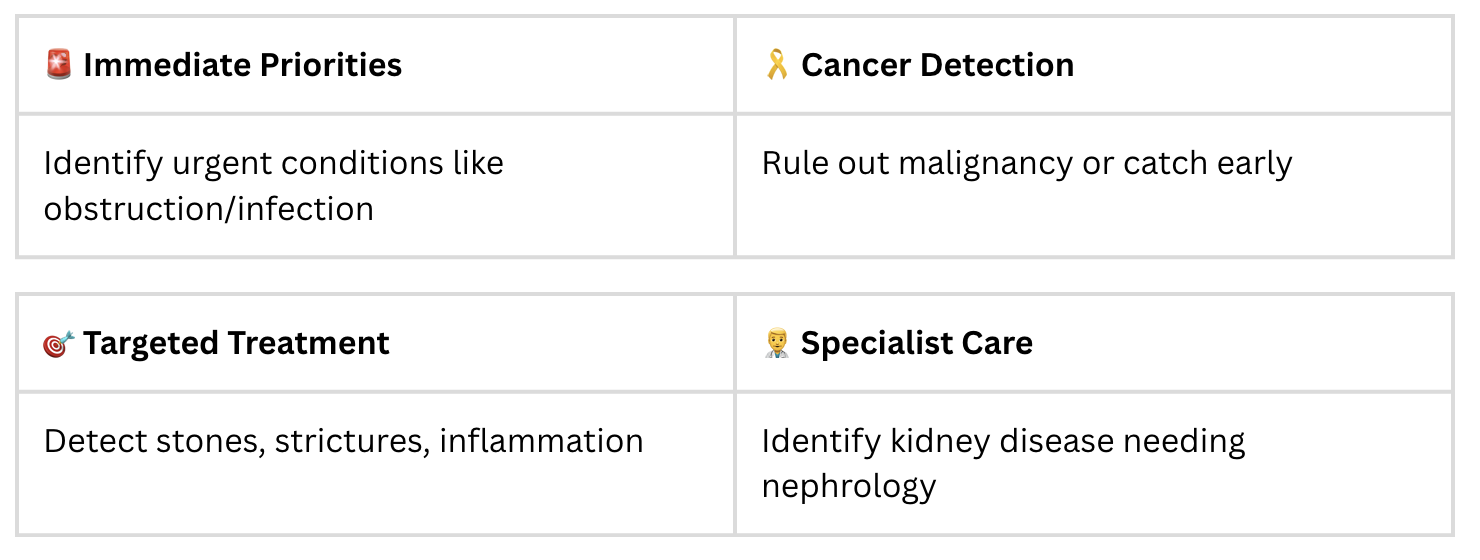
🎯 My Urology Pathway Goals
❓ Frequently Asked Questions
Q: My urine was red once but is now normal. Should I still see someone?
A: Yes, absolutely. Even single episodes warrant review, especially if you're 45+ or have risk factors.
Q: A workplace dipstick showed blood. Does that confirm a problem?
A: Dipsticks are screening tools. Laboratory microscopy confirms red blood cells and determines their source.
Q: Could my blood thinners be the only cause?
A: While anticoagulants increase bleeding, they may reveal underlying problems. Don't assume medications are the sole cause.
Q: What if my scans and cystoscopy are normal?
A: Very reassuring! If bleeding stops, routine GP follow-up may suffice. Recurrent bleeding prompts repeat investigations.
🎯 The Bottom Line
🩸 Any visible blood needs prompt attention
🚨 Emergency symptoms require same-day care
🔬 Persistent microscopic blood isn't trivial
🏥 Modern investigations are safe and informative
⏰ Early diagnosis dramatically improves outcomes
📞 Ready to Take the Next Step?
If you've noticed blood in your urine, don't wait. I understand how concerning haematuria can be, and I'm here to guide you through each step with expert care.
Contact Options:
Urgent concerns: Contact your GP or Contact Us
Emergency symptoms: Seek immediate care
Private consultation: Book Now
